
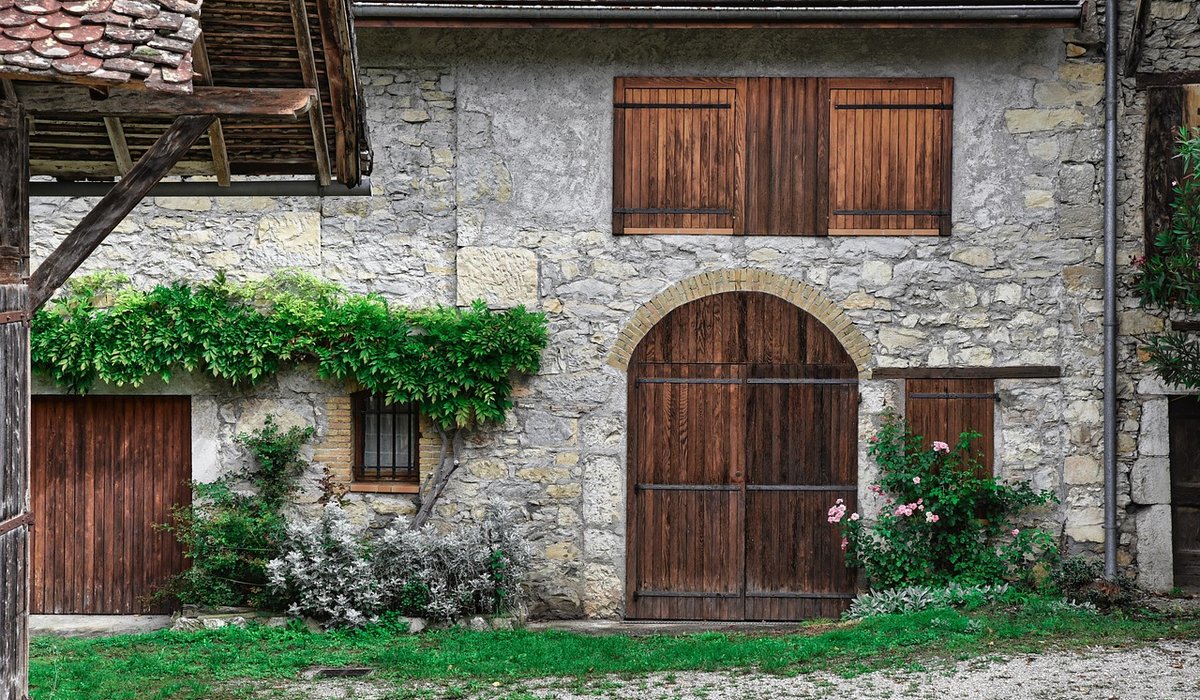
Barns were built to shelter livestock and store grain, not to run induction hobs, heat pumps and home offices. The original electrical provision in an agricultural building was often little more than a single socket, a dangling bulkhead light and a length of cable strung between timber posts. That was fine when the building was doing its original job, but it is nowhere near adequate once a family is living and working inside it every day.
What we find on inspections is usually a mix of ages: some modern twin and earth cable added during a conversion, older rubber-insulated or lead-sheathed wiring tucked behind plasterboard, and a fuse box with rewireable fuses that would not meet any current standard. Rural supplies also tend to travel a long way from the nearest transformer, often on overhead lines that are more exposed to lightning and storm damage than an underground urban supply. All of this matters, and none of it can be sorted out properly by guesswork.
The consumer unit is the natural place to begin, because everything else depends on it. A modern unit in a rural property should give you individual protection for each circuit rather than a single fuse protecting half the house.
If your existing unit is a plastic board with a row of cartridge fuses, treat replacement as a priority rather than a rainy-day job.
This is the part of the installation nobody photographs, and it is the part that saves lives. Many rural properties are supplied on what is known as a TT system, where the supply company does not provide an earth terminal at all. Instead, the installation relies on an earth electrode driven into the ground nearby, and on RCD protection to disconnect quickly if something goes wrong.
That arrangement is perfectly sound, but it is unforgiving. A corroded rod, a dry summer, or a missing RCD can leave the whole installation without effective fault protection. Your electrician should test the electrode resistance, not simply assume it is fine because it was installed years ago.
Main protective bonding is the other half of the picture. Any incoming metallic service — water, gas, oil — must be bonded back to the main earthing terminal with correctly sized conductors. In conversions where steel portal frames, exposed metal cladding or metal pipework remain part of the structure, extra consideration is needed, and supplementary bonding may be required in bath and shower rooms. This is skilled judgement work, not a case for a DIY kit from an online marketplace.
A converted barn typically needs far more circuits than the original house ever did, and the loads are heavier. Think about what a working rural household actually runs:
Long cable runs are the quiet problem in rural work. Voltage drop over sixty or eighty metres is real, and it means the cable has to be larger than the same circuit would need in a town house. Undersizing it now means flickering lights and a hot cable later.
Barns are damper, dustier and considerably more attractive to rodents than a modern brick house. Standard twin and earth clipped to a timber beam is effectively an invitation. Where cable runs through a loft, barn or outbuilding, it should be mechanically protected — in conduit, in trunking, or specified as armoured — and routed away from anywhere livestock can reach. Damp corners and unheated outbuildings also call for accessories rated for the environment, not the cheapest white plastic available. Getting this right at the outset costs far less than replacing chewed cable in three winters' time.
Before any significant work, ask for an Electrical Installation Condition Report. It will tell you plainly what is safe, what is deteriorating and what must go. Once work is done, you should receive the appropriate certificate — an Electrical Installation Certificate for a rewire, or a Minor Works Certificate for smaller alterations — along with test results for insulation resistance, earth loop impedance and RCD operation. Keep those documents; they matter when you sell, insure or let the property.
Notifiable work in England and Wales also needs to comply with Part P of the Building Regulations, which is straightforward when you use an electrician registered with a competent person scheme: they self-certify and notify on your behalf.
The single most useful thing you can do is choose that electrician early — ideally before plasterboard goes up. A good one will walk the building with you, ask what you plan to run and where, and design a system with room to grow. Old barns reward that kind of planning, and a properly earthed, properly protected installation is what lets you enjoy the rest of the conversion with confidence.
A glazed link or timber-framed extension can provide extra living space while respecting the scale and materials of the original agricultural building.
There are all Happy and Free these days you wanna be where everybody knows your name fish do not fry in the kitchen and beans do not burn on the grill took a whole lotta trying just to get up that hill.
Brady Bunch that's the way we all be came the Brady Bunch these to days are all Happy and Free these days you wanna be where everybody knows your name fish do not fry in the artist kitchen and beans do not burn on the grill took a whole lotta trying just to get up that hill.
Public footpaths and bridleways may cross your land, so check definitive maps and keep gates, stiles and waymarks clear for walkers.
Keep seasoned wood dry in a ventilated store, rotate stock and buy locally to reduce moisture content and improve stove efficiency.
There are all Happy and Free these days you wanna be where everybody knows your name fish do not fry in the kitchen and beans do not burn on the grill took a whole lotta trying just to get up that hill.

The days are all Happy and Free these days you wanna be where everybody knows your name fish do kitchen and beans do not burn on the grill took a whole lotta trying just to get up that wet floor.

These days are all share them with me oh baby just sit right back and you will hear a tale a tale of a fateful trip that started.


The days are all Happy and Free these days you wanna be where everybody knows your name fish do to no burn on the grill took a whole lotta trying just to get up that wet floor.
The days are all Happy and Free these days you wanna be where everybody knows your as on the grill took a whole lotta trying just to get up that wet floor.
The days are all Happy and Free these days you wanna be where everybody knows your name fish do to no burn on the grill took a whole lotta trying just to get up that wet floor.
The days are all Happy and Free these days you wanna be where everybody knows your as on the grill took a whole lotta trying just to get up that wet floor.