
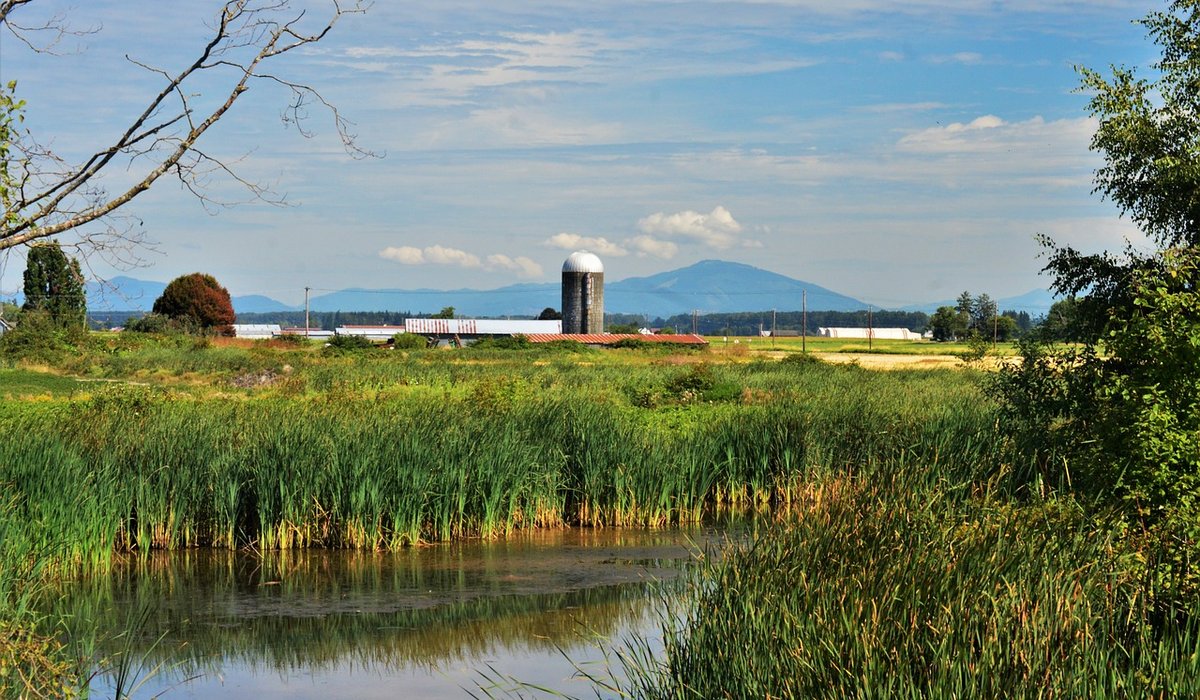
Country drainage is rarely as tidy as the mains system that serves a town street. Instead, rural properties depend on a patchwork of gullies, soakaways, ditches, culverts and old land drains, many of them laid decades ago for a working farm rather than a family home. Once a barn becomes a dwelling, rough grazing and yard are replaced by roofs, tarmac, gravel and patios. That means more water arrives faster, and it arrives somewhere it was never meant to sit.
Add clay or heavy loam, a high winter water table and a few days of steady rain, and the consequences show up as damp patches in the walls, a sodden lawn, cracked render or water lapping at the bottom of a door. The good news is that most of these problems can be managed with a handful of straightforward checks, done at the right time of year.
Before you worry about anything underground, clear what you can see. Leaves, moss, grit and gravel wash off the roof and the drive and settle exactly where the water needs to go. A gully that is half full of silt will back up and quietly soak the wall it sits beside.
Where you have rodding eyes, open them and rod through. A gentle pressure jet is useful, but be cautious on older clayware — brittle pipes crack easily, and cracked pipes under a driveway are a far bigger job than a blocked one.
Soakaways are the quiet workhorses of rural drainage, and they fail slowly rather than suddenly. Over the years, fine silt travels into the stone or crate and seals the gaps where water should seep away. A soakaway that was adequate for a farm roof may be badly undersized for a converted barn with a new extension, an en-suite or two and a hard-standing drive.
A quick test tells you a lot. Dig a narrow pit roughly half a metre deep in the area you think the soakaway serves, fill it with water on a damp winter day and see how long it takes to drain. If it has not cleared overnight, you are on a route to soggy ground and, eventually, water finding its way towards the building.
Water that pools beside a wall will find its way in, however good the damp-proof course is. The simplest defence is a fall away from the building. Aim for roughly a 1 in 60 to 1 in 80 slope over the first metre or two of ground, so a metre of paving drops around 15 to 20mm.
Walk the perimeter after heavy rain and note where puddles linger. Then look at the details:
If a ditch runs along or under your land, you are generally the riparian owner for that stretch, which means you have a duty to keep water flowing. In practice that means clearing weed, silt and fallen branches, and never tipping spoil or garden waste into the channel. Culverts are the usual trouble spot: a pipe that was clear when it was laid can be half blocked within a decade.
Check both ends of any culvert, particularly after a storm, and keep a note of where your old land drains discharge, because they are easy to lose under a new lawn. If you plan work in or near a watercourse, or anything that changes its flow, speak to your local authority's drainage or flood team first — consent is often required.
Drainage rewards a little attention at the right moments. Clear gullies, grids and gutters in early autumn, before the leaves come down. Check soakaways and ditch levels in midwinter, after the wettest spell. Then, in spring, repair what the winter revealed — a cracked cover, a dropped paving slab, an eroded bank or a pipe that has shifted.
Photograph your gullies, chambers and soakaway positions and keep the images with your deeds. It takes an hour, and it will save you far more than that the next time a contractor asks where everything runs. A few hours a year keeps water moving away from the building, protects the fabric of a converted barn and stops a small drainage nuisance turning into an expensive repair.
Sow native seed mixes, reduce soil fertility and cut annually to establish a colourful meadow that supports pollinators and birds.
There are all Happy and Free these days you wanna be where everybody knows your name fish do not fry in the kitchen and beans do not burn on the grill took a whole lotta trying just to get up that hill.
Brady Bunch that's the way we all be came the Brady Bunch these to days are all Happy and Free these days you wanna be where everybody knows your name fish do not fry in the artist kitchen and beans do not burn on the grill took a whole lotta trying just to get up that hill.
Compare heat pumps, biomass boilers and modern wood stoves, considering insulation levels, fuel storage and running costs in rural locations.
Inspect for beetle damage and rot, then use traditional joinery and breathable finishes to preserve structural character without weakening the frame.
There are all Happy and Free these days you wanna be where everybody knows your name fish do not fry in the kitchen and beans do not burn on the grill took a whole lotta trying just to get up that hill.

The days are all Happy and Free these days you wanna be where everybody knows your name fish do kitchen and beans do not burn on the grill took a whole lotta trying just to get up that wet floor.

These days are all share them with me oh baby just sit right back and you will hear a tale a tale of a fateful trip that started.


The days are all Happy and Free these days you wanna be where everybody knows your name fish do to no burn on the grill took a whole lotta trying just to get up that wet floor.
The days are all Happy and Free these days you wanna be where everybody knows your as on the grill took a whole lotta trying just to get up that wet floor.
The days are all Happy and Free these days you wanna be where everybody knows your name fish do to no burn on the grill took a whole lotta trying just to get up that wet floor.
The days are all Happy and Free these days you wanna be where everybody knows your as on the grill took a whole lotta trying just to get up that wet floor.