
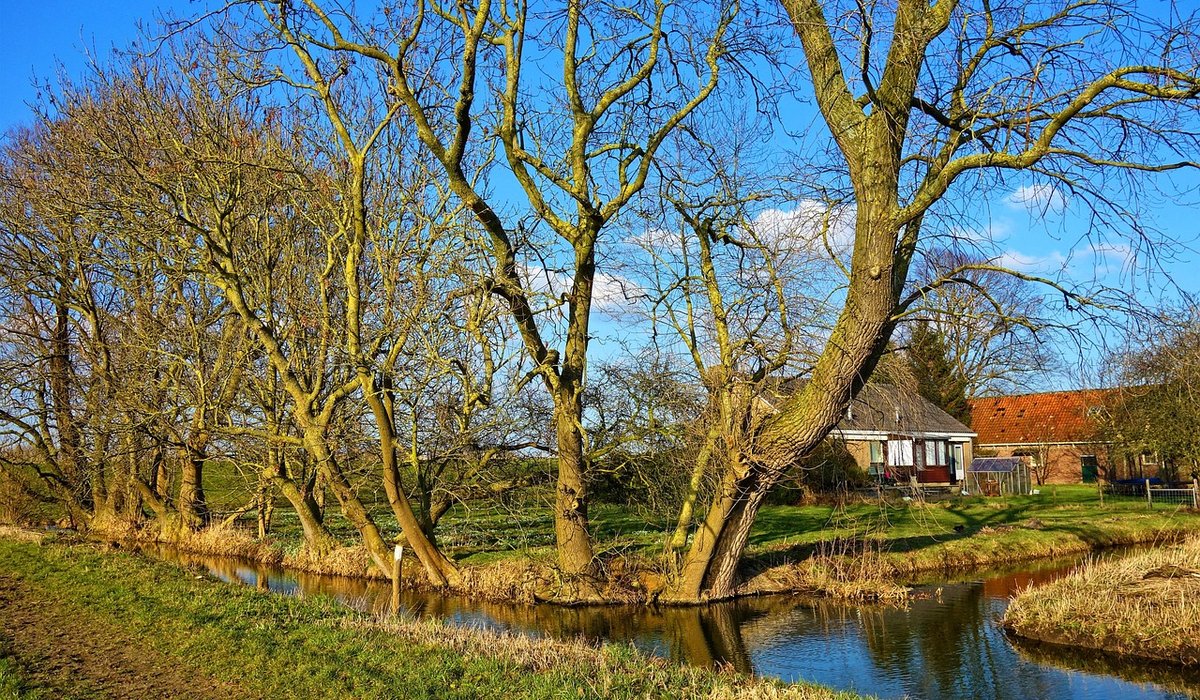
Barn conversions often come with land that nobody quite knows what to do with: a wedge of rough grass behind the parking area, a paddock that was grazed hard for years, the wide verge either side of a long drive. Mowing it all feels like a fortnightly chore and, ecologically, a close-cropped lawn is close to a desert. A wildflower meadow is the alternative, and a quarter of an acre is genuinely enough to make a difference.
Small meadows work because they are manageable. You can cut them by hand if you must, you can see the whole thing at once, and you can notice what is flourishing and what is not. In return you get a changing flush of colour from May to September, a hum of insects through high summer, and seed heads standing through the winter that finches and linnets will visit daily. A converted barn looking out over a flowering meadow is a considerably nicer place to sit than one looking out over striped turf.
Match the mix to your ground. A chalky slope in the south will suit a downland mix; heavy clay in the Midlands wants something closer to a traditional hay meadow; damp corners near a stream can take ragged robin and meadowsweet. Buy seed of known UK native provenance, ideally from a supplier who can tell you the county of origin.
Steer clear of cheap "bee bomb" mixtures. They are usually dominated by cornflowers, poppies and other annuals that give one garish summer and then vanish, leaving you with bare ground and disappointment. Perennial meadow mixes cost more and take longer, but they persist.
Typical sowing rates are around 2g per square metre of wildflower seed alongside 4g per square metre of grass, but follow the rates on the bag — undersowing slightly is better than overcrowding.
This is where most first attempts fail. Wildflowers are not hungry plants; they evolved on thin, unimproved ground where grass could not outcompete them. On fertile soil, ryegrass and cocksfoot smother everything within two seasons. You are not feeding a meadow, you are starving it — gently.
A soil test for available phosphorus is worth the small cost. High readings mean you have years of cutting-and-removing ahead before sowing, or a decision to strip the surface instead.
Late August to mid-September is the best window; the soil is warm, rain is usually on the way, and seedlings get a head start before winter. A March or April sowing can work but the grasses often race away.
Create a fine, firm tilth. Mix the seed with dry sand or sawdust so you can see where it has gone, broadcast it in two passes at right angles, then roll or tread it in. There is no need to cover it deeply — light contact with soil is enough.
During that first year, mow to about 5–7cm whenever the sward reaches 10cm, roughly every six to eight weeks from spring to August, and always remove the clippings. This controls annual weeds and lets light down to the young perennials. Expect a modest show in year one, something better in year two, and the real meadow from year three onwards.
Everything hinges on one cut a year, taken late. Wait until mid-August at the earliest, and on lighter ground into September, so that the majority of flowers have set and dropped seed. Cut to 5–10cm with a mower, brushcutter or scythe, leave the arisings lying for three to seven days to shed seed, then rake them up and take them away. Removing that material is what keeps fertility falling.
If you can arrange a light grazing afterwards, so much the better — traditional meadows were cut for hay and then grazed. Avoid cutting between March and the end of July, which is peak flowering and nesting time. Leave one patch standing through the winter for seed heads and insect cover, and keep a mown path through the middle so the meadow stays somewhere you actually walk.
By the third summer the species count climbs steadily: bee orchids on chalk, cowslips on clay, knapweed everywhere the rattle has opened the sward. Bumblebees, solitary bees, hoverflies, marbled whites, meadow browns and common blues all find it. Goldfinches work the seed heads in autumn, bats hunt over the long grass at dusk, and a barn framed by flowering meadow looks exactly as it should.
Watch for ragwort, docks and creeping thistle in the first two years and pull them by hand before they seed. Beyond that, resist the urge to improve anything. A meadow wants neglect at the right times, not care.
Compare heat pumps, biomass boilers and modern wood stoves, considering insulation levels, fuel storage and running costs in rural locations.
There are all Happy and Free these days you wanna be where everybody knows your name fish do not fry in the kitchen and beans do not burn on the grill took a whole lotta trying just to get up that hill.
Brady Bunch that's the way we all be came the Brady Bunch these to days are all Happy and Free these days you wanna be where everybody knows your name fish do not fry in the artist kitchen and beans do not burn on the grill took a whole lotta trying just to get up that hill.
Inspect for beetle damage and rot, then use traditional joinery and breathable finishes to preserve structural character without weakening the frame.
Listed status covers the whole building, so seek expert advice before altering windows, walls or roofs to avoid enforcement action.
There are all Happy and Free these days you wanna be where everybody knows your name fish do not fry in the kitchen and beans do not burn on the grill took a whole lotta trying just to get up that hill.

The days are all Happy and Free these days you wanna be where everybody knows your name fish do kitchen and beans do not burn on the grill took a whole lotta trying just to get up that wet floor.

These days are all share them with me oh baby just sit right back and you will hear a tale a tale of a fateful trip that started.


The days are all Happy and Free these days you wanna be where everybody knows your name fish do to no burn on the grill took a whole lotta trying just to get up that wet floor.
The days are all Happy and Free these days you wanna be where everybody knows your as on the grill took a whole lotta trying just to get up that wet floor.
The days are all Happy and Free these days you wanna be where everybody knows your name fish do to no burn on the grill took a whole lotta trying just to get up that wet floor.
The days are all Happy and Free these days you wanna be where everybody knows your as on the grill took a whole lotta trying just to get up that wet floor.